

News
Alumni Insights Tourism: How can France remain number one?
The symbolic milestone of 100 million international visitors was achieved in 2024. This record represents 8% of France's GDP. However, the world's leading tourist destination since the 1980s is now facing challenges in terms of its ranking. So when industry professionals met up in Paris from September 23 to 25 for the International & French Travel Market (IFTM), they took a fresh look at what makes France's tourism so outstanding, exploring ways to enhance the value of territories without saturating them, innovate without altering them, and grow business without exhausting resources.
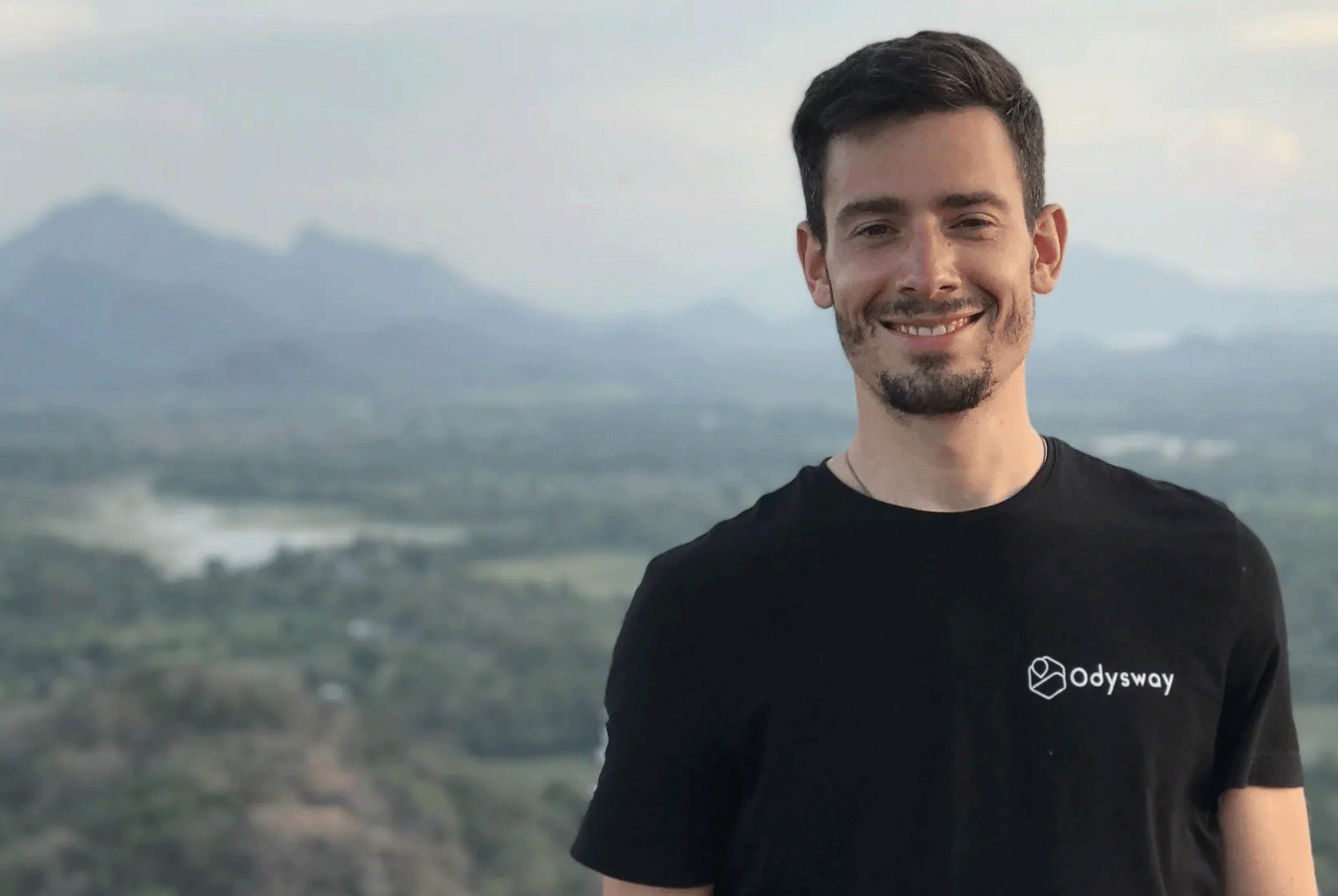
Two SKEMA alumni - Laurence Deblonde Buisson (SKEMA 1997), Digital Marketing & Communicat️ion Director of Le Voyage Fantastique and Romain Masina (SKEMA 2015), Founder & CEO of Odysway - are innovating in the sector and now share their insights as pioneers of a new era.
What kinds of innovative experiences or services can enrich France's tourism offering without diluting what makes it so special?
Laurence Deblonde Buisson: "France has an extraordinary heritage and a unique lifestyle. Innovating without betraying this identity means enriching travellers' experiences while remaining true to these fundamentals. Since COVID, customers have been looking above all for reassurance and personalisation, in a context of constrained purchasing power. This explains the success of flexible, modular and all-inclusive offers.
Innovation should also be based on authenticity. The example of agritourism in Italy shows the potential of get-togethers with local producers. In France, the rise of micro-destinations with Airbnb, as in the Meuse this summer, illustrates the search for territories that are less saturated but offer a multitude of genuine experiences. Festivals, gastronomy and local encounters respond to this quest for friendliness and sharing.
Technology can complement the experience without distorting it, e.g. using augmented reality to revisit monuments and AI for customised recommendations. Physical agencies can continue to play a key role, combining human advice with digital tools.
Lastly, sustainability remains a challenge: according to the consultancy firm Protourisme, only 4% of travellers would agree to pay 10% more for an eco-responsible stay. So sustainable innovation needs to come from agencies through support for micro-producers, partnerships with associations or the promotion of credible labels like Travelife, by putting an honest spotlight on what is being done at no extra cost to the traveller."
What are France's comparative advantages today in the face of destinations focused on hyper-experience or sustainable tourism?
Laurence Deblonde Buisson: "France doesn't need spectacular concepts to be appealing. Its advantage lies in providing a truly emotional experience rooted in its history and lifestyle. Sleeping in a château, taking part in the grape harvest in Champagne, sharing a meal in an inn or discovering a local festival are authentic experiences that don't need to be scripted.
France has adopted an integrated approach to sustainable tourism: it aims to become the world's leading sustainable destination by 2030 (CIT, July 2025), but without pitting sustainability against attractiveness. It combines heritage, gastronomy, a wide range of landscapes and local culture, enabling travellers to enjoy an eco-responsible stay without sacrificing comfort or an experience.
This balance strengthens its competitiveness: tourism accounts for 8% of GDP and two million direct and indirect jobs (CIT, July 2025). In 2024, France welcomed 100 million tourists representing revenues of €71 billion, but remained fourth worldwide in terms of value. To reach €100 billion in international revenue by 2030, it will need to capitalise on this twofold advantage: authenticity as a hyper-experience and integrated sustainability as a strategic driver."
Tomorrow's tourism could be built around more human, more local, more sustainable approaches. What are the opportunities for France?
Romain Masina (SKEMA 2015): "Tourism can no longer be limited to the rapid consumption of experiences. It must enable a form of sharing and openness, which requires simpler, more sober, human-scale formats.
The COVID crisis confirmed that a lot of travellers are taking a step back. Many are no longer looking for a series of trips or destinations, but to experience meaningful moments. At Odysway, this strengthens our belief in the need to offer experiences that put quality above quantity, and connection above performance.
This is also where France has a real role to play. For a long time, we believed that an unforgettable experience had to be achieved by travelling long distances. Today, we know that a profound change of scenery can also be experienced just a few hours from home.
Since the creation of Odysway in 2018, our ambition has been to offer a different way of travelling. A journey that is more conscious, more respectful, and above all more rooted in the actual situation of the territories and the people we meet. From the outset, we wanted to make the idea of connection central to travel: again: taking the time to exchange ideas and understand a culture, a profession or a way of life.
The rich diversity of France's regions, with their varied landscapes, know-how and lifestyles, opens up tremendous possibilities. We are developing more and more local experiences, like following wolf trails in the Mercantour, spending a few days with a shepherd in the Béarn, sharing the daily life of a potter in the Luberon or discovering beekeeping with a devotee in the Corrèze. These formats enable us to forge strong links, gain a better understanding of our territory and travel in a different way.
Our business strategy is moving in this direction: by 2027, more than half our trips will take place within France. It's not a question of withdrawing, but a belief in local, more sustainable and balanced tourism.
Tomorrow's tourism won't necessarily be based on constant novelty, but on a different way of looking at what's already there. This is the direction we want to take with Odysway."
Interview by SKEMA Alumni. Our thanks to Laurence and Romain for their contributions.