

News
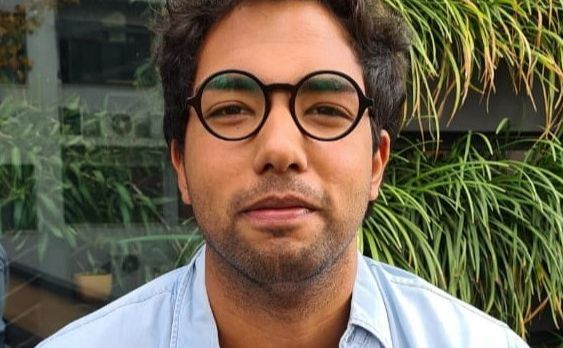
Pedro Peixoto (SKEMA 2018): « With 10b, we help investors to have a impact »
During his studies at SKEMA Business School, Pedro founded the private equity fund 10b. Originally from Brazil, this ambitious entrepreneur talks to us about the growth of his company since its launch, and the role it plays in Brazil's agriculture, environmental protection and sustainability sectors.
Why did you launch 10b and what does it consist of?
10b is an investment fund based in Brazil that I set up in 2019. We invest in companies that contribute to making the agriculture, food and nature conservation sectors more productive and sustainable. In Brazil, these sectors are particularly important, as the country is the world's leading producer of corn, soy and beef. It is estimated that Brazilian food production feeds nearly a billion people worldwide.
As an investor, you can put your capital to work for the common good. And as a Brazilian, if you really want to have an impact, you have to invest in agriculture, a field in which Brazil is a world leader. That's where the name of our company comes from: "10b" refers to the 10 billion people who will make up the world's population by 2055. We'll have to figure out how to feed all these people in a healthy, sustainable way. It's a long way off, and we need to start investing in these areas now to see large-scale results in a few years' time.
How has the company evolved since its creation, and what have been your most significant investments?
In 2019, we launched our first fund to invest in companies offering software, hydrotechnology and biotechnology solutions, serving livestock, beef and dairy production. In 2020, we launched a second fund, followed by a third in 2023.
In 2020, we invested in Kepler Weber, a listed company specializing in grain storage. Since then, it has grown steadily, and our returns have been excellent. In Brazil, agricultural production is enormous, but storage capacities are not keeping pace, which represents a real opportunity.
Another major investment was made in 2020 in Agrivale, an innovative company that supplies organic fertilizers and pesticides made from bacteria and insects to combat pests and stimulate root growth. Biotechnology is a booming sector, particularly in Brazil, where its growth could reach 60% on farms within 15 years. We're talking about a market worth almost $500 billion. It's an investment that's arousing great enthusiasm and attracting players from all over the world, all aware that bio-inputs represent the future. These cutting-edge agricultural technologies also improve soil management and promote carbon capture, considerably enhancing the sustainability of agriculture - a crucial issue when you consider that this sector accounts for almost a third of global CO₂ emissions.
We also invested in Rehagro, a Belo Horizonte-based company that has been active in agricultural training for 20 years. It is the leading private player in post-graduate training for workers, farmers, technicians and researchers. Over 30,000 people have been trained since its creation, and it is growing fast.
Another company in which we have invested is Seedz, which offers loyalty programs combined with innovative technologies to help farmers improve their productivity. We also backed Rúmina, which combines software, hardware, biotechnology and digital solutions for farmers.
Our approach is to seek out growth companies capable of generating a positive impact while offering a good return to investors. What sets 10b apart is that we are not passive investors: we are fully involved, sitting on boards of directors and actively accompanying companies as true partners.
Can you tell us about your latest fund-raising? Was it a success?
We don't do traditional venture capital, multiplying investments blindly. We move forward opportunity by opportunity, project by project. For the Agrivale fund-raising, we have therefore developed in-depth expertise in the field of bio-inputs, so that our investors know exactly what they are getting into.
This fundraising was carried out with our regular investor base (family offices, banks, endowment funds, etc.), mainly in Brazil. Foreign investors are often more cautious, due to the country's political instability. But since last year, the world has begun to recognize Brazil's strategic role in agriculture. More and more foreign funds (in Europe, the United States, the Middle East, etc.) are showing a keen interest in Brazilian companies. As a result, our fund-raising process is becoming increasingly international, which is excellent for diversifying our sources of investment.
What's next for 10b?
We now want to go beyond agriculture. One sector we're targeting is that of vitamins, minerals and dietary supplements. This is a fast-growing market.
We also want to focus on the environment and carbon markets. The idea would be to buy land degraded by years of intensive livestock farming, restore it, heal the soil, replant forests and capture carbon. There is a strong global demand for carbon credits. It would also help to produce organic food and support local farmers exploiting this land.
What have been your greatest challenges and satisfactions since graduating from SKEMA?
Leaving school, you quickly realize that you're bound to make mistakes, even when you think you're doing everything right. Managing expectations - those of customers, partners, contractors and yourself - is a real challenge, because nothing ever goes exactly to plan. You have to learn to anticipate and prepare for worst-case scenarios.
But despite the difficulties, this journey is also very stimulating. The real satisfaction comes when you take a step back, look at how far you've come, and say to yourself, despite the stress and doubts: "I've achieved something".
What advice would you give to SKEMA students who want to start their own business?
The best advice I can give is to always seek the wisdom of more experienced people. Talk, share, mentor and build a network of trust. You'd be surprised how willing people are to advise and guide you.
Ultimately, it's up to you to make your own decisions. But feedback can save you precious time.
And above all: have fun and enjoy the ride!
Interview by lepetitjournal.com for SKEMA Alumni